


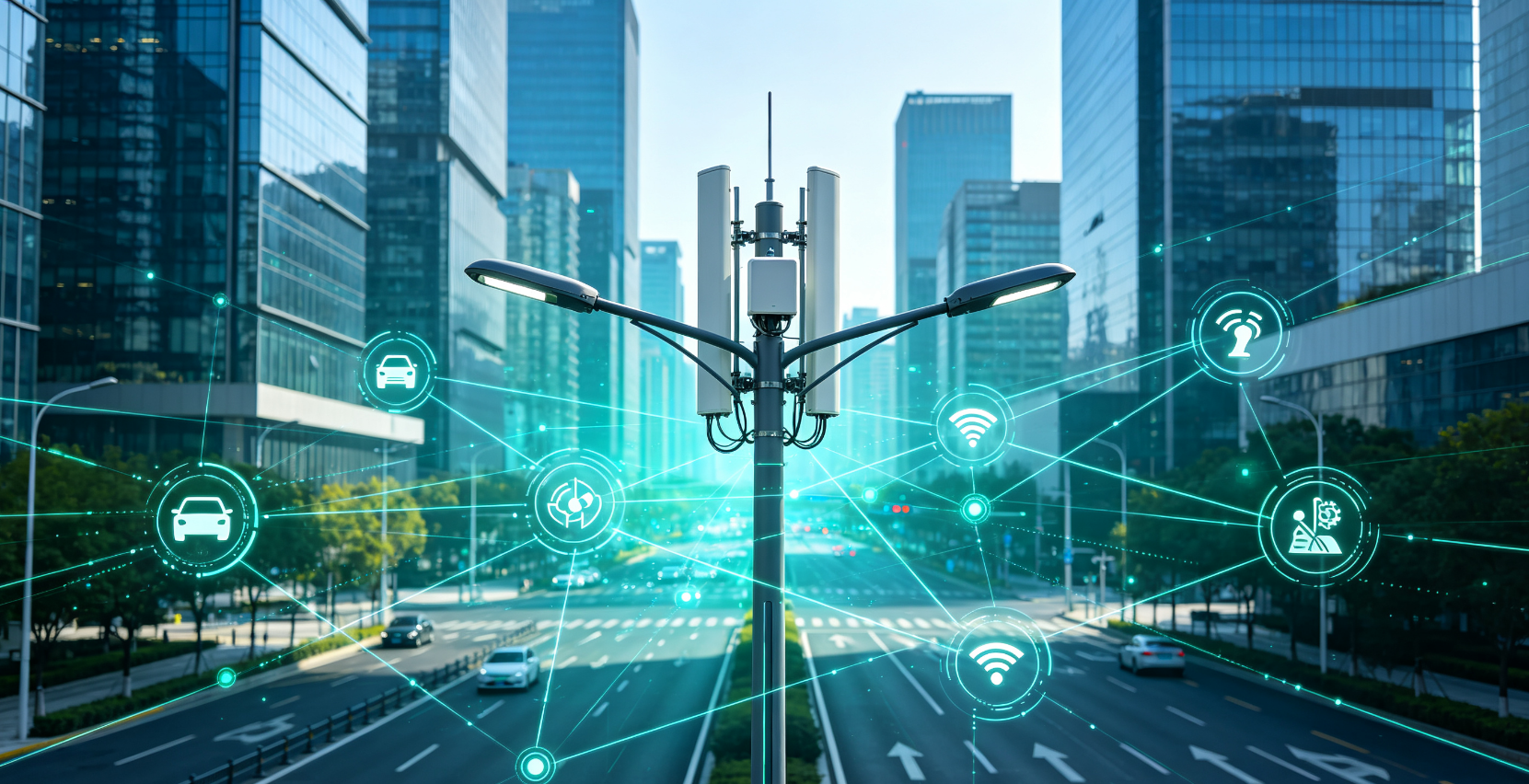
We think of smart cities as an IoT way of life
A smart city encompasses most other IoT markets from connected cars, hospitals, first responders, lighting, security, heating, energy, digital broadcasts, and so on. The density of devices, neighboring interference and general performance expectations at varying heights and distances make integration, testing and certifications necessary for smart city applications. The more devices, vehicles, buildings, and people become connected, the more important it is to have a broad portfolio of products and breadth of engineering expertise to optimize how devices work with each other and within the overall network.
Water Monitoring
Real-time monitoring of urban water supply and drainage networks enables data collection on water pressure, flow rate, and water quality, allowing timely detection of pipeline leaks and abnormal operating conditions — supporting digital operation and maintenance management of water infrastructure.
Smart Street Lighting
Networked control of urban road lighting infrastructure enables remote dimming and fault reporting, balancing energy-saving management with refined oversight of city public facilities.
Environmental Monitoring
Multi-point sensing and data collection of urban air quality, noise levels, temperature, and humidity enable real-time monitoring of city environmental indicators, providing reliable data support for urban environmental governance.
Smart Security
Networked security devices in urban public areas enable video surveillance and alarm data backhaul, strengthening security protection in critical zones and enhancing the city's public safety response capabilities.
Smart Buildings
Smart buildings integrate lighting, security, HVAC, smart grid, and intelligent space systems. Powered by IoT-enabled solutions, they deliver optimized indoor experiences while achieving efficient building operations, low-carbon sustainability, and cost reduction with enhanced productivity.
Connected Transportation
Intelligent urban road traffic management enables intersection traffic flow monitoring, coordinated traffic signal scheduling, and real-time data collection on bus and vehicle status — improving throughput efficiency and ensuring orderly operation of the city's road network.
View More